Key Takeaways:
• Class C motorhomes offer the perfect balance of comfort and maneuverability for Central Florida attractions
• Travel trailers provide the most flexibility for extended stays near theme parks and state parks
• Pop-up campers excel for budget-conscious families exploring Florida’s natural areas
• Local weather patterns and campground restrictions significantly impact RV type selection
Central Florida’s unique blend of world-famous theme parks, pristine state parks, and year-round outdoor recreation creates specific demands for RV travelers. When searching for the best Types of RVs Longwood FL has to offer, your choice can make or break your adventure, especially when you factor in Florida’s unpredictable weather, crowded campgrounds, and varying site restrictions. The right RV transforms a good trip into an unforgettable experience, while the wrong choice leaves you cramped, stressed, or stuck in unsuitable conditions. Beyond basic accommodation, your RV selection determines which campgrounds you can access, how easily you’ll navigate local attractions, and whether you’ll stay comfortable during Florida’s intense summer heat and sudden afternoon thunderstorms. Smart RV selection considers not just your group size and budget, but also the specific challenges of Central Florida camping.
The key lies in understanding each RV type’s strengths and limitations in Florida’s unique environment.
What’s the Most Versatile RV Type for Longwood’s Diverse Attractions?
Class C motorhomes rank as the most versatile RV type for Longwood’s attractions, balancing comfort and size.
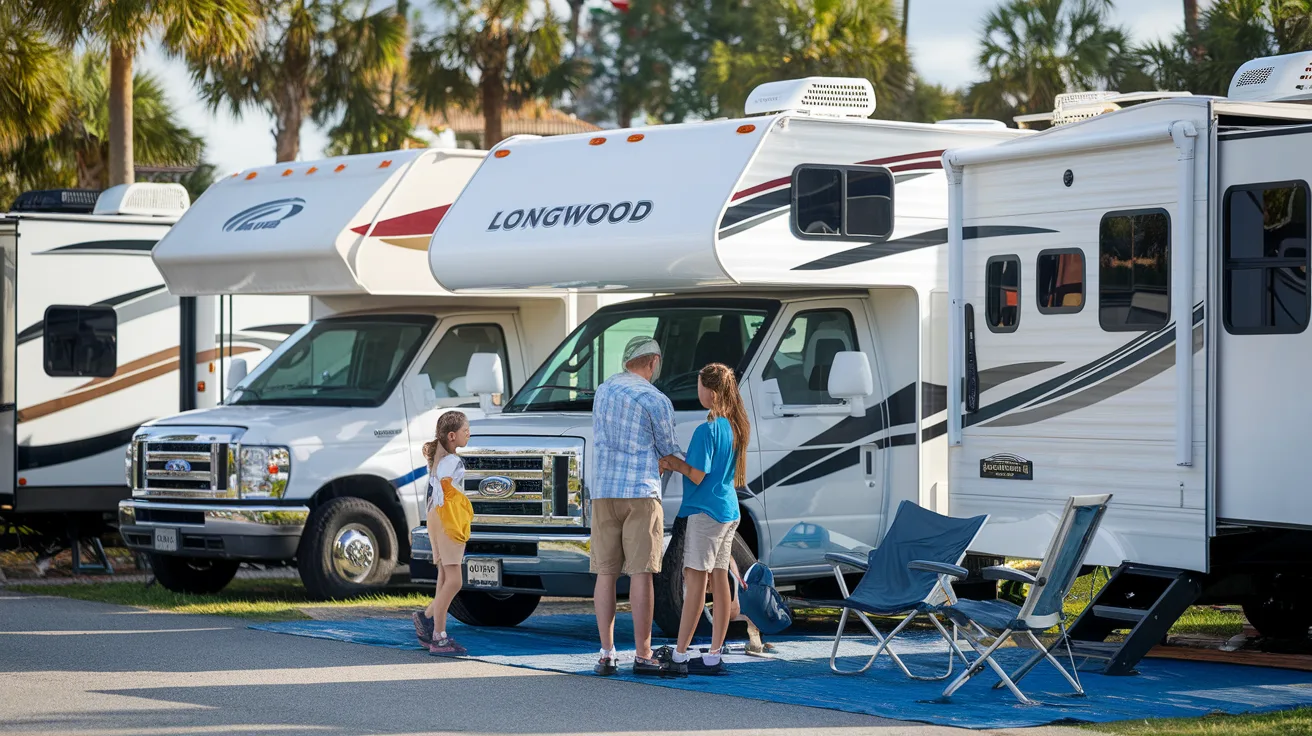
Class C motorhomes consistently rank among the best Types of RVs Longwood FL visitors can choose, delivering optimal versatility for the area’s mix of theme parks, state parks, and urban attractions with sizes from 20-31 feet. These mid-sized RVs handle everything from Disney’s Fort Wilderness tight turns to Wekiwa Springs’ winding park roads. The overhead cab provides extra sleeping space without requiring slide-outs, crucial when many Florida campgrounds have narrow sites designed decades ago. At Fireside RV Rentals, our Class C units consistently rank highest for customer satisfaction in the Orlando metro area. They’re large enough for week-long family vacations yet compact enough to navigate downtown Winter Park or Sanford’s historic district. The integrated design means you’re not towing anything, which matters when afternoon thunderstorms hit unexpectedly.
Most Class C models include full kitchens, bathrooms, and sleeping for 6-8 people. You’ll find them at virtually every campground from Disney’s Fort Wilderness to Wekiwa Springs State Park, with rental rates typically ranging $150-250 per night during peak season.
How Do Local Campground Restrictions Affect RV Type Selection?
Campground restrictions significantly limit your RV choices in Central Florida.
Central Florida campgrounds impose varying restrictions on RV age, length, and type that directly impact rental choices and availability. Understanding these limitations is crucial when selecting the best Types of RVs Longwood FL campgrounds will accommodate. Private campgrounds near theme parks typically allow any RV type and size, while state parks often limit length to 40 feet and impose age restrictions. Some upscale RV resorts require units less than 10 years old and exclude pop-up campers entirely. Research specific campground rules before choosing your RV type. Wekiwa Springs State Park limits RVs to 35 feet and prohibits slide-outs on certain sites. Conversely, Orlando Southwest KOA accommodates big rigs up to 45 feet with full hook-ups and cable TV.
Our essential RV driving tips include guidance on navigating Florida’s unique road conditions and campground access challenges.
The key is matching your RV choice to confirmed campground availability rather than hoping suitable sites exist.
Why Choose Travel Trailers for Extended Theme Park Visits?
Travel trailers excel for extended theme park stays because they offer unmatched flexibility and value.
Travel trailers rank among the best Types of RVs Longwood FL families prefer for extended theme park stays because they provide maximum living area per dollar spent and the crucial ability to unhitch for daily adventures. The key advantage? You can unhitch and use your vehicle for daily theme park trips, grocery runs, or exploring downtown Orlando without breaking camp. This flexibility becomes invaluable during week-long Disney vacations where driving a 30-foot motorhome to Magic Kingdom parking creates unnecessary stress. Travel trailers also provide more interior space than equivalent-length motorhomes since there’s no engine compartment or cab area. A 28-foot travel trailer offers roughly the same living space as a 32-foot Class A motorhome, making them perfect for families who plan to spend significant time inside their RV between park visits.
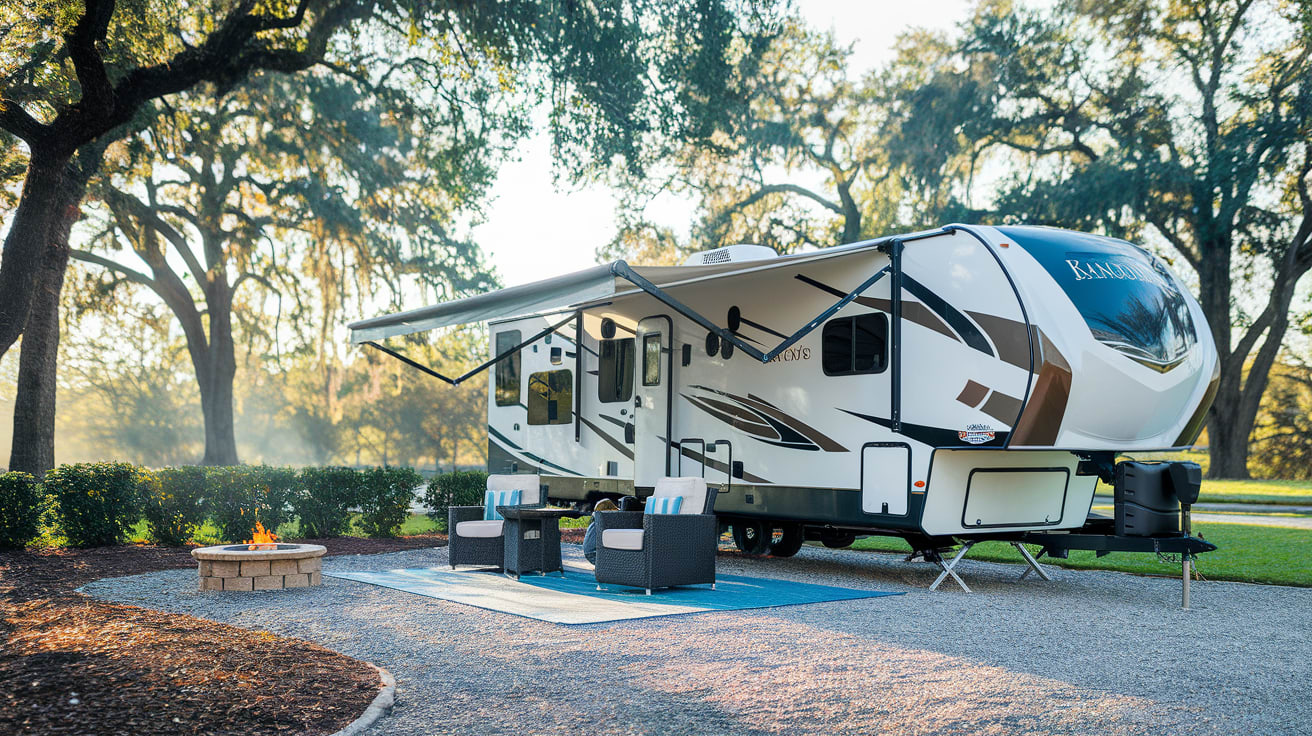
Families consistently report higher satisfaction with travel trailers for stays exceeding four days, making them perfect for family RV vacations that combine multiple attractions. Consider this: Disney’s Fort Wilderness allows RVs up to 45 feet, but sites fill quickly and cost $100+ per night. RV rentals in Longwood include travel trailers specifically chosen for Florida campground compatibility, with features like tropical-rated air conditioning and reinforced awnings for sudden storms.
The downside? You need a capable tow vehicle, and setup takes 15-20 minutes compared to a motorhome’s park-and-plug simplicity.
When Should You Choose Class A Motorhomes for Florida Weather?
Class A motorhomes are best during extreme weather seasons because they handle Florida’s challenges better than any other RV type.
Class A motorhomes represent some of the best Types of RVs Longwood FL weather can demand during summer months and storm season, providing superior weather protection with heavy-duty construction, multiple air conditioning units, and better insulation systems. Florida’s weather isn’t just about heat. Sudden thunderstorms with 60+ mph winds, intense UV exposure, and humidity that penetrates everything require robust RV construction. Class A units typically feature residential-grade insulation, dual-pane windows, and reinforced roof systems that handle Florida’s environmental extremes. The substantial weight and low center of gravity also provide stability during severe weather events. While you’d never want to ride out a hurricane in any RV, Class A units handle typical Florida afternoon storms without the rocking and swaying common in lighter RVs.
However, size creates limitations during peak season when campground access becomes restricted.
Many state parks restrict Class A access, and maneuvering through places like Mount Dora’s narrow streets becomes challenging. Gas consumption also increases significantly, with most Class A units averaging 7-10 MPG versus 12-15 MPG for Class C models.
Where Can You Take Pop-Up Campers in Central Florida?
Pop-up campers access more diverse camping locations than any other RV type in Central Florida.
Pop-up campers and small travel trailers under 25 feet offer the widest range of camping destinations while providing essential amenities for Florida adventures, making them some of the best Types of RVs Longwood FL nature enthusiasts can select. These compact units access remote state park sites, primitive campgrounds, and waterfront locations unavailable to larger RVs. Pop-up campers particularly shine for Florida state park camping, where smaller sites and lower fees make them ideal for nature-focused trips. You’ll find welcome access to places like Blue Spring State Park’s premium waterfront sites, Canaveral National Seashore’s beach camping, and numerous state forest campgrounds that restrict larger RVs entirely.
The trade-offs are real but manageable for outdoor-focused trips. Limited storage means careful packing, and bathroom facilities often require campground restrooms. However, for families prioritizing outdoor activities over RV amenities, these compact options deliver tremendous location access and value at $75-125 per night.
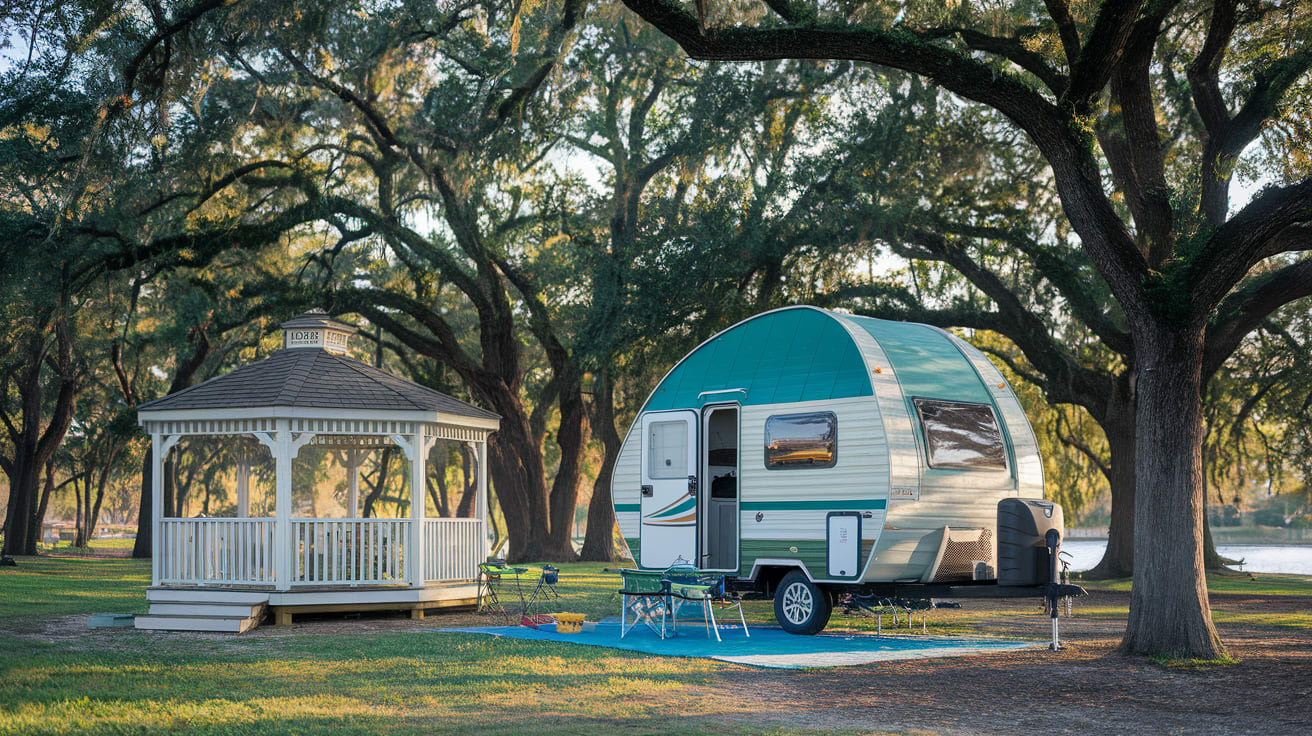
Pop-ups work exceptionally well for destinations where manatee watching and kayaking are the main attractions. You’ll spend minimal time inside the RV, and the money saved on rental fees funds more activities. Many campgrounds also offer better sites to smaller RVs, including waterfront spots unavailable to larger units. The lightweight construction makes them easy to tow with most SUVs or pickup trucks, eliminating the need for heavy-duty tow vehicles.
What Features Matter Most for Florida RV Adventures?
Powerful air conditioning tops the essential features list for Florida RVing.
When evaluating the best Types of RVs Longwood FL conditions require, powerful air conditioning, quality awnings, and outdoor storage become essential features rather than nice-to-haves for successful Florida RV trips. Standard RV air conditioning units struggle with Florida’s humidity and heat. Look for dual AC units or upgraded systems rated for continuous operation in tropical conditions. Our rental fleet includes units specifically equipped for Florida’s demanding climate conditions. Awnings provide crucial outdoor living space and protection from sudden rain showers that define Florida afternoons. However, cheap awnings fail quickly in Florida’s UV exposure and wind conditions. Quality motorized awnings with wind sensors protect your investment and camping comfort. Storage matters differently in Florida than other regions, requiring space for beach gear, rain protection, and seasonal clothing changes.
External storage compartments keep wet or sandy items separate from living areas, maintaining comfort during your entire stay.
Frequently Asked Questions
What’s the minimum RV size needed for a family of four in Florida?
A 24-foot travel trailer or Class C motorhome provides adequate space for four people, including separate sleeping areas and a full bathroom. Smaller units work for short trips but become cramped during extended stays.
Can I rent an RV in Longwood without towing experience?
Yes, Class C and Class A motorhomes require no towing experience. Most rental companies provide orientation sessions covering basic operation, and Florida’s flat terrain makes driving relatively easy for beginners.
Which RV type offers the best fuel economy for Florida road trips?
Small travel trailers (under 25 feet) towed by efficient vehicles typically achieve the best fuel economy. Class B camper vans offer good mileage but limited space for larger groups.
Are there RV restrictions during Florida hurricane season?
Many campgrounds require evacuation during hurricane warnings. Some RV parks close entirely June through November. Always purchase travel insurance and have evacuation plans when visiting during hurricane season.
What’s the average cost difference between RV types in Longwood?
Pop-up campers start around $75/night, travel trailers range $100-200/night, Class C units run $150-250/night, and Class A motorhomes cost $200-400/night. Peak season rates increase 25-50%.
Do I need special licenses to drive large RVs in Florida?
No special license is required for RVs under 26,000 pounds gross weight, which includes most rental units. However, many rental companies have age and experience requirements for larger Class A motorhomes.
Which RV type works best for first-time renters?
Class C motorhomes offer the best balance of comfort, maneuverability, and ease of operation for first-time RV renters. They provide a car-like driving experience with full RV amenities.
Can I take any RV type to all Florida state parks?
No, each state park has specific restrictions on RV length, slide-outs, and sometimes age. Always verify campground requirements before booking your RV rental to avoid disappointment or additional fees.
Your RV type choice fundamentally shapes your Longwood adventure experience. Finding the best Types of RVs Longwood FL offers means matching Class C motorhomes for versatility with mixed itineraries, travel trailers for maximum space and value during extended stays, and compact units for budget-friendly access to Florida’s outdoor treasures. Match your selection to your specific destinations, group size, and planned activities rather than assuming bigger is automatically better. Consider Florida’s unique challenges including intense heat, sudden storms, campground restrictions, and the need for reliable air conditioning when making your final decision.
Rental availability, pricing, and terms may vary by location. Contact your local Fireside RV Rentals location for current availability.
Love the RV life enough to make it a living? Plenty of people do. If you’ve ever been curious about how to start an RV rental business, it’s a real opportunity in a fast-growing market.